
Inbound Marketing for Dummies: A Beginner’s Guide
What is Inbound Marketing?
Inbound Marketing, also known as attraction marketing, is a methodology that aims to attract potential customers by creating valuable and relevant content. Unlike Outbound Marketing, which relies on intrusive techniques such as cold calling and advertisements, Inbound Marketing focuses on capturing the attention of users by offering solutions to their problems and needs.
Why is it Important?
In the digital age, consumers are in control. They search for information, compare products, and make purchasing decisions long before interacting with a company. This is where Inbound Marketing shines, as it allows businesses to position themselves as thought leaders and build lasting relationships with their customers.
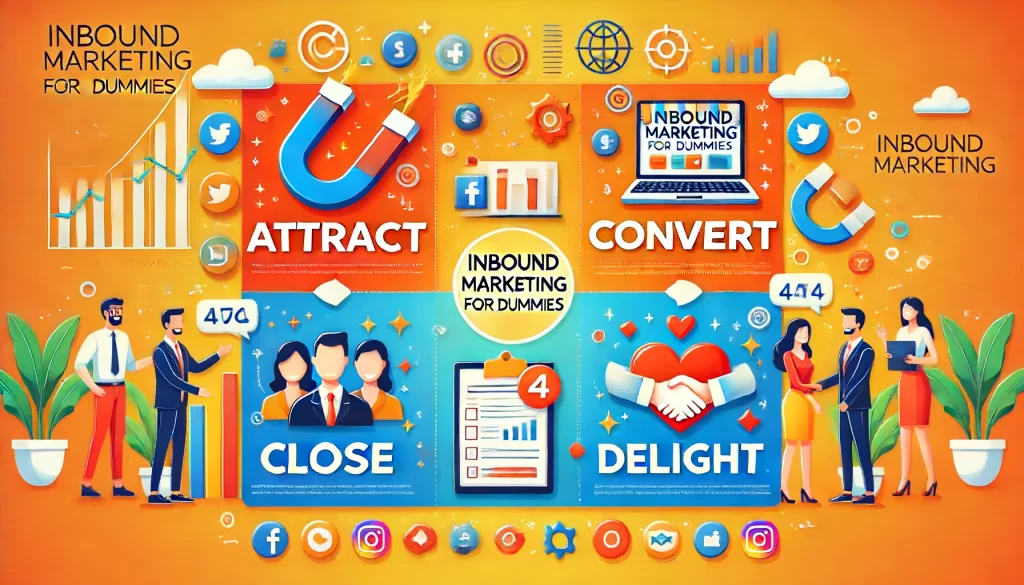
The Four Pillars of Inbound Marketing
- Attract:
- SEO (Search Engine Optimization): Optimize your content to appear in the top search results.
- Blogging: Create useful and relevant content that addresses the questions and needs of your potential customers.
- Social Media: Use platforms like Facebook, Twitter, and Instagram to share your content and attract your audience.
- Convert:
- Calls to Action (CTAs): Encourage your website visitors to take action, such as downloading an eBook or subscribing to a newsletter.
- Landing Pages: Specific pages where visitors can receive an offer in exchange for their contact information.
- Forms: Collect information from your visitors to convert them into leads.
- Close:
- CRM (Customer Relationship Management): Tools to manage and analyze interactions with your customers.
- Email Marketing: Send personalized and relevant content to your leads to guide them through the sales funnel.
- Marketing Automation: Programs that automatically send content to leads based on their behavior and stage in the buying cycle.
- Delight:
- Personalized Content: Provide content that continues to be useful to your customers even after the purchase.
- Social Media: Keep interacting with your customers, resolving their questions, and thanking them for their loyalty.
- Surveys and Feedback: Listen to your customers and continuously improve your products and services based on their feedback.
Best Practices Examples
- Corporate Blog:
- Regularly publish articles on topics of interest to your audience.
- Include guides, tutorials, and case studies that demonstrate your expertise in the area.
- Ebooks and Whitepapers:
- Offer downloadable content in exchange for contact information.
- Ensure these resources are detailed and useful, providing real value to your leads.
- Webinars and Videos:
- Conduct online seminars where you explain relevant topics and answer questions in real-time.
- Create educational and entertaining videos that are shareable on social media.
- Email Marketing:
- Segment your contact list and send specific content to each group.
- Use emails to nurture your leads and move them through the sales funnel.
Conclusion
Inbound Marketing is not just a trend; it is an effective and sustainable strategy to attract, convert, close, and delight your customers. By implementing these principles, your company can position itself as an authority in the industry and help businesses build strong and lasting relationships with their customers.
Ready to start with Inbound Marketing? Contact PAMPA today and watch your business transform!


